EMDR Therapy to Process Trauma
I specialize in helping clients heal from trauma using the evidence-based approach of EMDR (Eye Movement Desensitization and Reprocessing).
Is This You?
You've tried to move on, but certain memories, feelings, or reactions keep pulling you back. Maybe you find yourself:
Replaying a painful experience over and over, even when you don't want to
Feeling suddenly overwhelmed by emotions that seem out of proportion
Avoiding certain places, people, or situations that trigger distressing memories
Struggling with anxiety, shame, or a deep sense that something is wrong with you
Going through the motions of daily life but feeling disconnected or numb
Finding that talk therapy has helped, but hasn't fully resolved the deeper wound
If any of this sounds familiar, EMDR may be exactly what you've been looking for.

What Can EMDR Help With?
EMDR is most well-known for treating PTSD and trauma, but its applications are much broader. I use EMDR to help clients with:
Trauma and PTSD — including childhood trauma, abuse, accidents, and medical trauma
Anxiety and panic attacks — including phobias, social anxiety, and generalized anxiety
Depression — especially when rooted in past painful experiences
Grief and loss — processing the pain of losing someone or something important
Low self-esteem and shame — healing the negative beliefs formed from past experiences
Relationship difficulties — when past wounds are affecting your current connections
Perfectionism and burnout — often rooted in early experiences of not feeling good enough
Immigrant and cultural trauma — navigating identity, displacement, and belonging
How Does EMDR Work?
When something traumatic or deeply distressing happens, the brain sometimes struggles to process the experience fully. Instead of being stored as a regular memory, it gets "stuck" — remaining raw, vivid, and emotionally charged, as if it happened yesterday. This is why trauma survivors can feel suddenly flooded by emotions or sensations that seem out of proportion to the present moment.
EMDR works by using bilateral stimulation — typically guided eye movements, taps, or sounds that alternate between the left and right sides of the body — while you focus on a distressing memory. This process mimics what happens naturally during REM sleep, allowing your brain to resume its natural processing and integrate the memory in a healthier way.
The goal isn't to erase the memory — it's to change the way your brain holds it, so it no longer carries the same emotional charge. After EMDR, clients often describe feeling like the memory has become distant, like something that happened a long time ago rather than something happening right now.

What Does an EMDR Session Look Like?
Many people are curious — and sometimes nervous — about what EMDR actually involves. Here's what you can expect when we work together:
Phase 1 — History and Preparation (Sessions 1–3) We begin by getting to know each other and exploring what brings you to therapy. I'll ask about your history, your current challenges, and what you hope to achieve. Before we begin processing any memories, we build a foundation of safety and trust. This includes creating your personal Safe Place — a mental resource you can return to anytime you feel overwhelmed.
Phase 2 — Assessment Together we identify the specific memories, beliefs, and body sensations that are connected to your distress. We also identify the negative beliefs that grew out of your experiences — things like "I'm not safe," "I'm not good enough," or "It was my fault" — and the positive beliefs you'd like to hold instead.
Phase 3 — Processing This is the heart of EMDR. While holding the target memory in mind, I guide you through sets of bilateral stimulation. You don't need to talk in detail about what happened — you simply notice what comes up and follow where it goes. Most clients find this process surprisingly gentle and are often moved by how quickly things begin to shift.
Phase 4 — Integration and Closure After processing, we check in on how the memory feels now, strengthen the positive beliefs, and ensure you leave each session feeling grounded and stable.
How Long Does EMDR Take?
Every person's healing journey is different. Some clients experience significant relief in as few as 6–12 sessions, particularly when working on a single traumatic event. Others with complex or long-standing trauma may benefit from a longer course of treatment. During our initial consultation I'll give you a realistic sense of what to expect based on your specific situation.
Is EMDR Right for Me?
EMDR is a well-researched, highly effective therapy — but it's not the only tool I use, and it's not right for everyone at every stage. The most important thing is that we find the approach that fits you best.
EMDR tends to work especially well if:
You feel like you've been stuck despite other forms of therapy
You find it hard to talk about what happened without becoming overwhelmed
You sense that past experiences are driving current patterns in your life
You're ready to do deeper work but want a structured, evidence-based approach
If you're not sure whether EMDR is right for you, the best first step is a free 15-minute consultation. We'll talk about what you're experiencing and I'll share my honest recommendation.
Create your Safe Place

In our trauma work together, I often guide clients to create a “Safe Place”—a mental space where you feel completely calm, secure, and supported.
This is how you do it: Take a moment to close your eyes and imagine a place where you feel completely safe, comfortable, and at ease. This could be a real location you know, like a favorite room or a peaceful outdoor spot, or a place entirely from your imagination. Notice the details—what do you see, hear, smell, or feel? Are there any objects, colors, or textures that make you feel secure? Imagine yourself there fully, noticing how your body and mind feel in this space. Stay here for a few moments, letting yourself feel calm and supported. You can return to this Safe Place anytime you need to feel grounded or centered.
EMDR in the East Bay
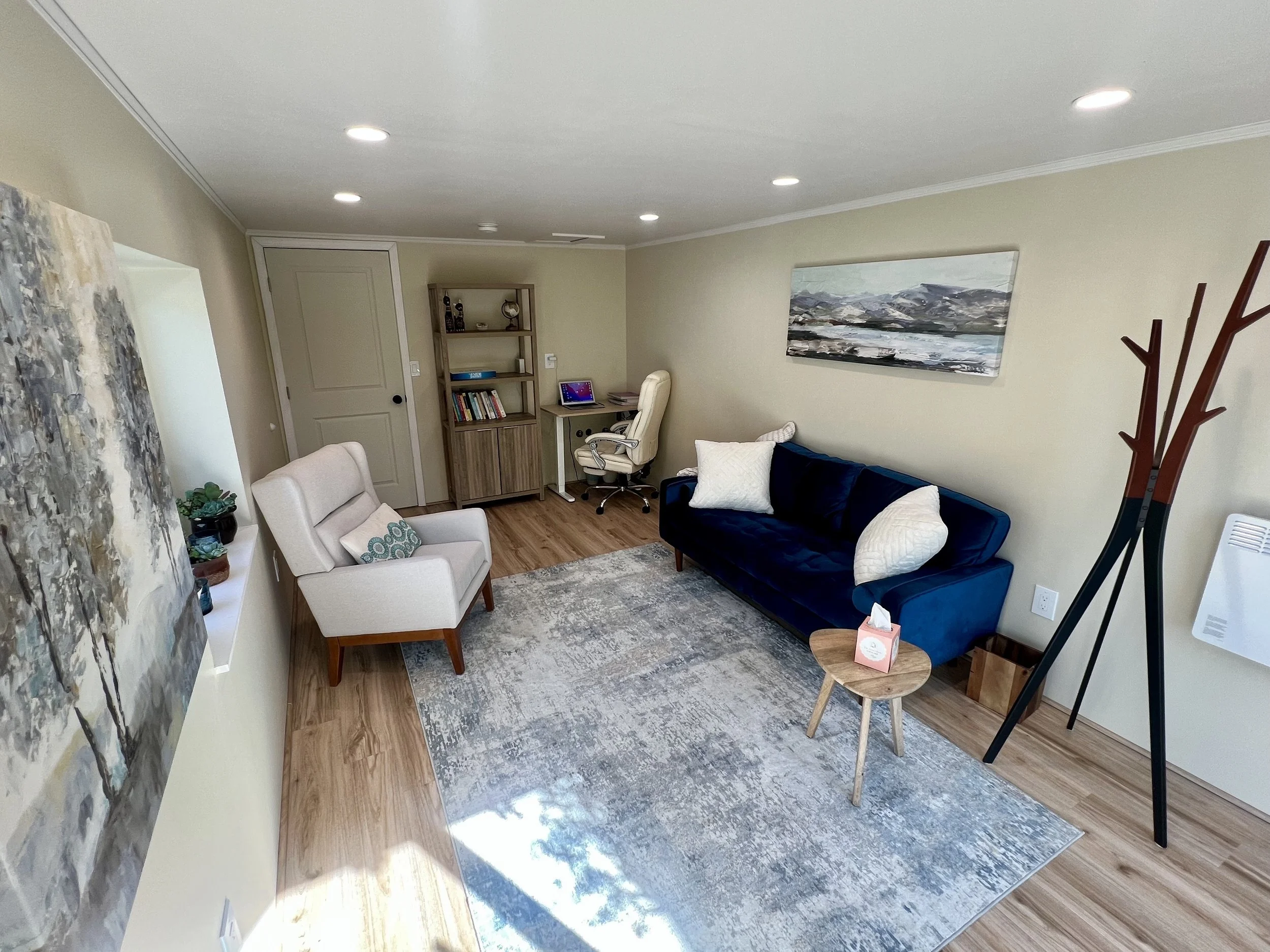
I offer EMDR therap in-person at my East Bay (Richmond Annex) office and my Marin County office in Corte Madera, CA (300 Tamal Plaza, Suite 220). Online therapy is available throughout California.

Ready to take the first step?
Healing is possible — and you don't have to carry this alone. Book your free 15-minute consultation today and let's find out if EMDR is the right fit for you.